
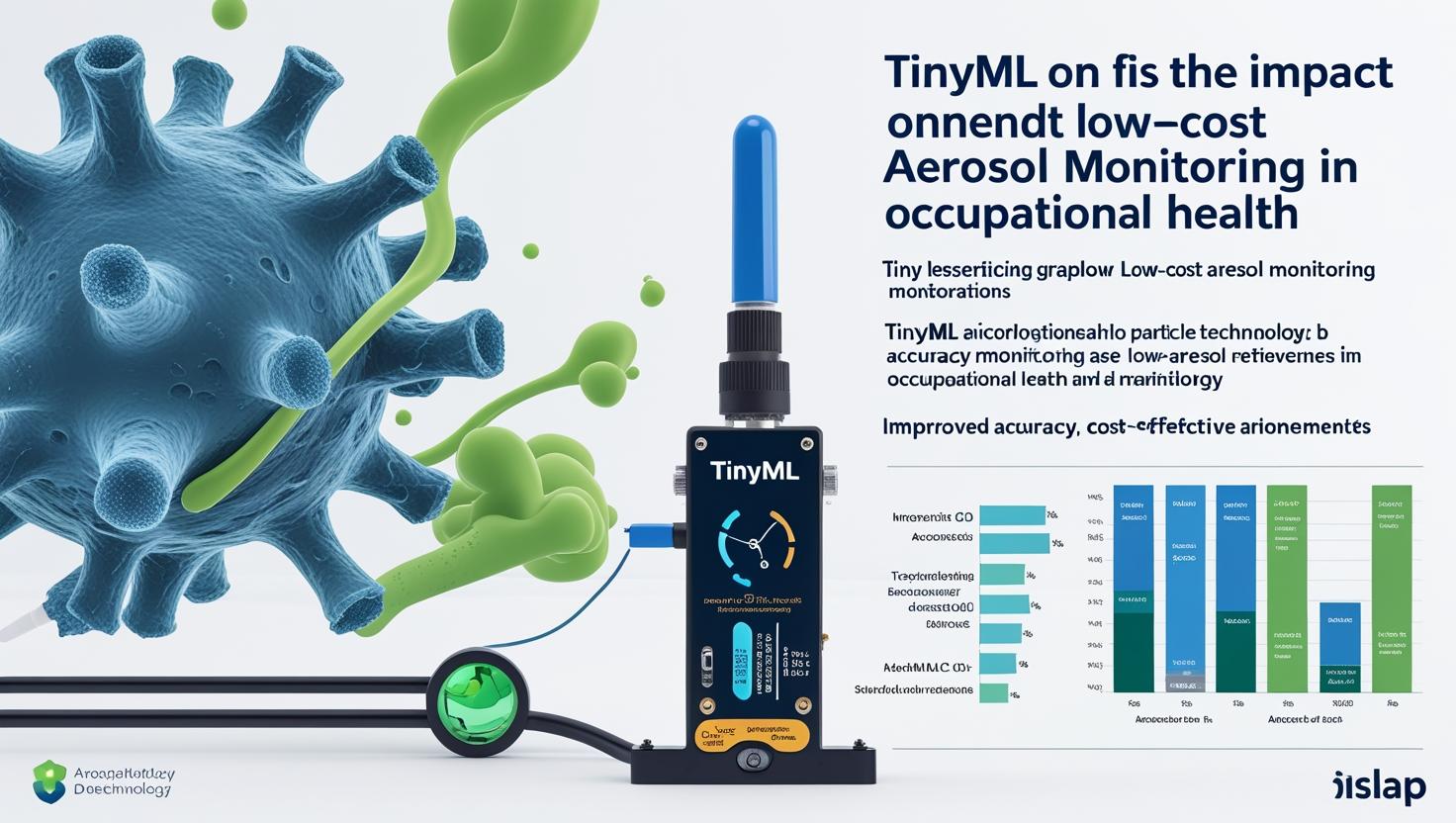

Introduction: The International Sampler Comparison Group (ISCG) is at the forefront of improving how we measure aerosol exposure in workplaces. As technology advances, low-cost, real-time aerosol sensors offer immense potential for continuous monitoring, moving beyond traditional, often costly, episodic measurements. However, a critical challenge remains: ensuring the accuracy, reliability, and comparability of these affordable devices with established reference methods. This blog post introduces a groundbreaking collaborative project between Universiti Sains Malaysia (USM) and ISCG, leveraging the power of Tiny Machine Learning (TinyML) to address this very challenge.
The Challenge with Low-Cost Sensors: While accessible, low-cost sensors can suffer from issues like sensor drift, environmental interference (e.g., temperature and humidity fluctuations affecting particulate readings), and inherent noise in their signals. This variability can undermine the confidence of occupational hygienists in using them for critical exposure assessments. The ISCG’s ongoing work on comparing real-time detection systems highlights this need for enhanced validation.
Our Innovative Solution: TinyML at the Edge: Our project proposes a paradigm shift by embedding intelligence directly into these affordable sensors using TinyML. TinyML refers to the application of machine learning models on highly resource-constrained devices, such as the ESP32 microcontrollers we utilize. Instead of sending raw, potentially noisy data to a cloud for processing, TinyML allows for:
- On-Device Calibration: Real-time, adaptive calibration models run directly on the sensor. These models learn from discrepancies between the low-cost sensor’s readings and known reference points (or co-located conventional samplers), correcting for biases and drift as data is collected. Imagine a sensor that self-calibrates throughout its operation!
- Intelligent Noise Reduction: TinyML algorithms can effectively filter out environmental noise and signal artifacts, providing a cleaner, more reliable data stream. This reduces the need for extensive post-processing and improves the immediate utility of the data.
- Preliminary Data Fusion: For multi-sensor units, TinyML can intelligently fuse data from different sensor types (e.g., combining particulate readings with temperature and humidity data) to provide a more robust and accurate overall aerosol concentration estimate.
The Project Journey: From Lab to Field:
- Phase 1: TinyML Model Development & Integration: We will develop and optimize TinyML models specifically for aerosol sensor calibration and noise reduction. These models will be highly efficient, requiring minimal computational power, and will be deployed onto our ESP32-based IoT sensor units.
- Phase 2: Rigorous Laboratory Validation: We will conduct extensive comparative studies in controlled laboratory environments. This involves exposing the TinyML-enhanced low-cost sensors alongside ISCG’s established reference samplers (e.g., gravimetric samplers, advanced real-time monitors) to various aerosol types, concentrations, and environmental conditions. We aim to utilize facilities like wind tunnels (if accessible through ISCG collaborators) to simulate realistic workplace airflow dynamics.
- Phase 3: Real-World Field Performance Analysis: Following successful lab validation, the TinyML-enhanced sensors will be deployed in diverse occupational settings. Here, their performance will be directly compared against conventional samplers, potentially utilizing the ISCG’s Workplace Atmospheric Multi-sampler (WAM) device for simultaneous data collection. This will provide invaluable real-world performance data.
- Phase 4: Protocol Development & Dissemination: Based on our findings, we will contribute to developing best practices and standardized protocols for integrating TinyML into the validation, deployment, and operational use of low-cost real-time aerosol samplers. Our results will be openly communicated through publications and workshops, informing future ISCG guidelines.
Expected Impact: A New Era of Accessible Precision: This project is set to deliver:
- Significantly Enhanced Accuracy: Low-cost real-time aerosol monitors will become more reliable and trustworthy for occupational exposure assessment.
- Accelerated Adoption: By demonstrating improved performance and providing clear validation protocols, we can accelerate the widespread adoption of cost-effective real-time monitoring solutions globally, particularly for SMEs and organizations with limited budgets.
- Innovation Leadership: This collaboration will position ISCG and USM at the forefront of integrating cutting-edge TinyML technology into occupational hygiene practice.
- Actionable Insights: More accurate real-time data means better, faster, and more targeted interventions to protect worker health.
We are incredibly excited about the potential of this collaboration to push the boundaries of occupational aerosol measurement science. Stay tuned for updates on our progress!